I am in Paris for #HISPinParis22. It’s my first time back since 2019, the longest I’ve been away from my native city. As usual, one assignment for the class is that students have to blog about their experience. Personally, I haven’t blogged since < checks website for first time in months > April 2021. Yikes. So yeah, if I’m gonna talk the talk, I should walk the walk, right?
I struggled about what to say for my first time back in three years, and then lucked out: my friend Gwenaëlle’s most recent visit to Paris coincided with mine, and she tagged along for a visit to the Musée d’Orsay. She’s a longtime LA resident but we met in 1992 (!!!) when we were both French kids in NYC. Check out her work here.

Anyway, she followed along as I led the students through Orsay. As usual, I waxed poetic about all of Orsay’s many qualities. After all, it’s in my top-three museums of all time. I just love it. Why do I appreciate it?
Two main reasons:
The Musée d’Orsay is adaptive reuse at its finest. It was not a great train station, but its central location and attractive design makes it a lovely landmark in Paris. Saving the station was a battle that was won only recently: it was slated for demolition in the 70s and was finally reopened as a museum in 1986.

Most really good museums, honestly, were designed to be museums in the first place. Below, Gwenaëlle mentions the Pompidou as a gold standard and I agree wholeheartedly: it’s a holistic museum, with contemporary architecture showcasing contemporary art. I’d argue, however, that Orsay does something similar with its adaption from a train station. It’s crowded, it’s disorienting. There are very enclosed spaces and very soaring spaces. To me it reflects the overstuffed insanity that was the turn of the 20th Century when it was built, as well as the art that it houses. The museum is overstuffed, it’s TOO MUCH. I can only imagine, of course, but in my mind the turn of the 20th Century was exactly like that, a chaotic period of conflict, inspiration, invention, classicism and new ideas all intermingling at once. From a preservation perspective, in particular, it’s a great example that one need not tear down a Beaux Arts building simply because it’s lost its original use. It can have a second life. Since Orsay was completed in 1986, many more sites seem to have followed in its footsteps, including quite a few in the US. In other words, I think this building was a trailblazer.
The (distant?) second reason I love the museum is the art within. There is a wealth of decorative arts, with lots of Art Nouveau in particular. Plus, models of the Opéra Garnier, Les Halles, architectural drawings of other sites from the 19th and early 20th Century. There’s of course also all the Monets, Manets, Degas-es, Van Goghs, etc. you can shake a stick at. Honestly, though, I’m not super into that. I am, however, really into the few Caillebottes, Rousseaus, and a few other more obscure paintings rather that the postcard-and-notebook-cover type stuff. Personally, my tastes go more to the early 20th century than the 19th when it comes to painting, but paintings aren’t really why I visit Orsay anyway.
So, long story short, I love it, warts and all. When we prepared to leave the museum, Gwenaëlle confided that she dislikes it and I was so excited to hear that! Museums should cause visceral reactions, as far as I’m concerned, and I was delighted that she felt strongly and also differently from me. Isn’t that the whole point? That one should react at a museum?
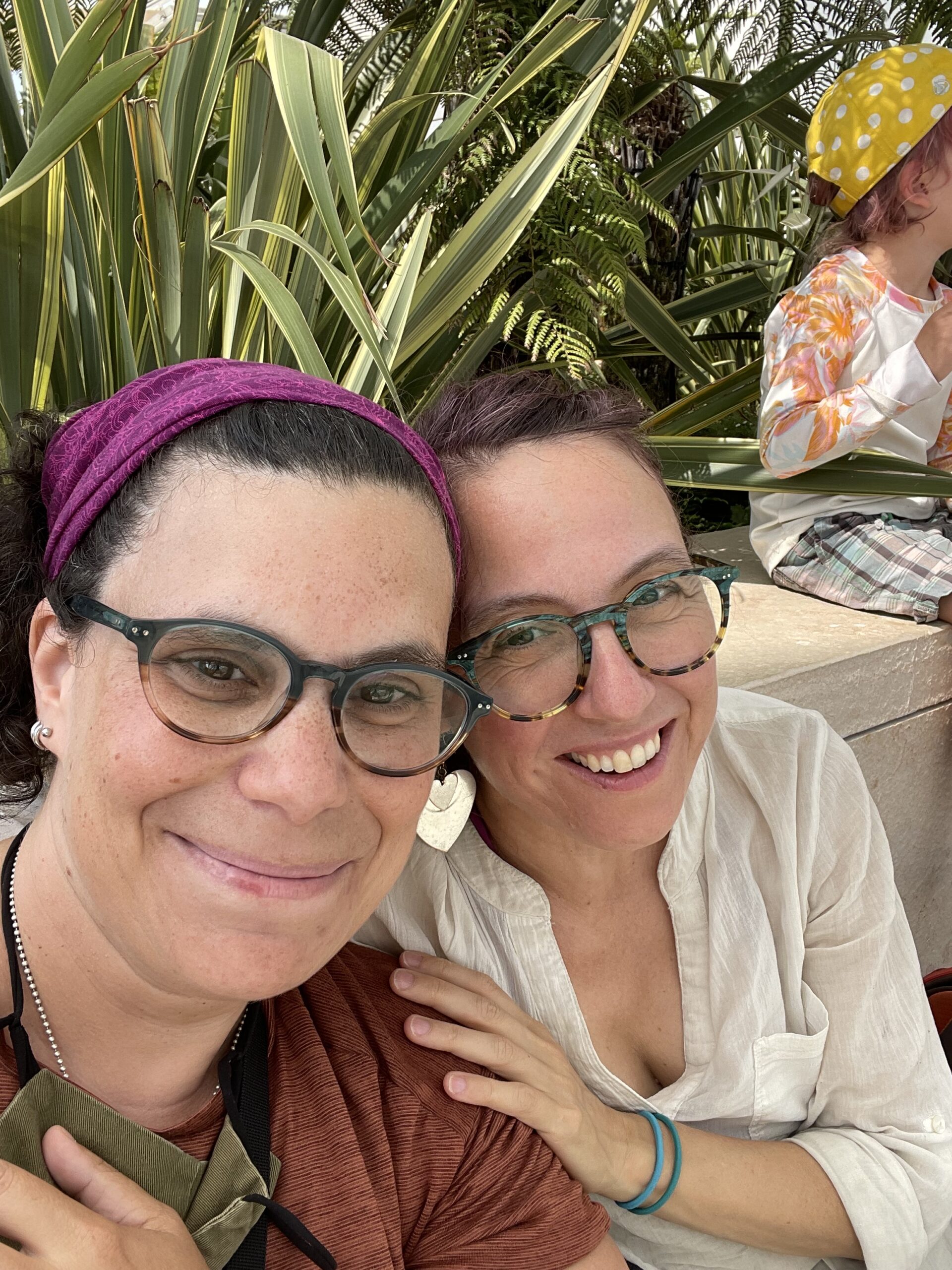
Anyway, without further ado, here’s Gwenaëlle’s perspective:
“The Musée d’Orsay has great architecture and great art but the viewer experiences too much of both all at the same time. First because you never escape the architecture. Everything has a lot of personality from the building, the remodeling, the paint color, to the signage. This creates a hyper density of visual stimulation. This is the challenge with converting an old railway station into an art exhibition space.
The remodeling of the station into a museum is overly complicated. I would like to see a simpler layout of exhibition spaces, one that would result in less salon style hanging with more spacing between the artworks and an overall experience of the art that reflects the building’s airy openness.
Entering the main floor galleries that flank the central hall, many of the rooms have low ceilings that are dimly lit with dangling lights. Perhaps the architects were trying to evoke the experience of entering the train cars that once filled the station, but for me the switch of going from a huge brightly illuminated space to a small dark one in order to view the paintings has too much contrast.
One of the great aspects of the museum is its decentralized arterials connecting the different levels and exhibition spaces. It’s a lovely museum to wander in. For these two reasons, the wayfinding design would be more successful if it was more consistent in style, be more bold at the entrance of the museum and scale back at local touchpoints. There are simply too many signs, embracing a large variety of scales, that are not always placed at the most strategic moments. The main entrance is largely devoid of signage whereas each side staircase has a full museum breakdown. A more considered hierarchy would leave the viewer feeling more oriented and less bombarded with information at each decision point.
Lastly, when it comes to artwork descriptions, Orsay seems to prioritize visibility above all else. As a result, the high contrast placards often rival the artwork for attention. I feel like a balance between easily accessible information and subtlety could be achieved here. That is the magic of graphic design.
A benchmark for me of a great museum experience just across the Seine is the Centre Pompidou renovated in 1997 to ( in part) accommodate the more contemporary expectations of a museum experience. I would love to see something similar happen to Orsay.“
Have you been to Orsay? If so, what do you think? I loved discussing the museum with my friend and getting a whole new perspective on it from her. I hope the museum affects you strongly enough to want to discuss it, and that you are lucky enough to have a friendship that lends itself to such discussions.