
This post is the second in my syllabus/course development series. The intro is here.

Creating a course from scratch is paralyzing. There’s just so much to figure out: readings, assignments, format, and it all interconnects. A good course setup is a balancing act that takes years to really master.
One mistake I think is widespread is starting from “what do I need to cover in the course?” The reality is that you can never do exactly what you want in a course, so starting with an “all-you-can-eat” approach is actually asking for frustration. For instance, with my “international preservation” course, I could cover a million items: international organizations, NGOs, government programs, sites, museums, integration with city planning, tourism issues, environmental issues, cultural issues… The more I worked on the list, the more I panicked.
Instead, I’ve learned to work backwards when developing a course. Yes, sure, you want a topic. But once you have that in place, working from the format inward works better for me. Yes, of course, you want a course that challenges students and works in the curriculum, and supports the institutional goals, etc. But honestly at its most basic, a course is a syllabus. Forming the syllabus isn’t just a road map or a contract, it’s like the jug that holds the water. Its shape can make or break a course.
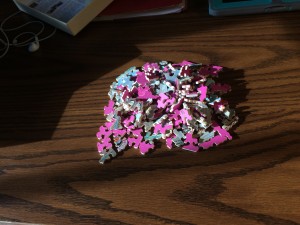 So instead of starting with the Big Questions, I approach it like building a puzzle: corners first, then sides. Then group pieces by color. Then fill in.
So for building a class:
Semester: 16 weeks
Week 1: intro
Week 16: final project due
Week 8: spring break
Week 15: conclusion/presentations.
Week 6: midterm – I realized this course could use an exam in the early parts. I checked the withdrawal deadline to make sure I had time to grade and return the exam before students have to choose to drop the course. Just in case…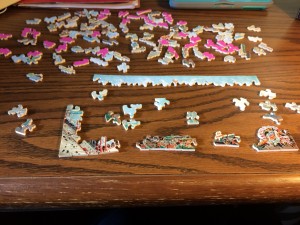
After that, and only after that, do I start filling in my schedule. You’d think this might be limiting, but actually I find it helps me figure out the progression of what students have to learn and how they can go about it. It creates sections in the semester, breaking down tasks. Next time I’ll talk more about the filling in and how that works. In the meantime, can anyone guess what this puzzle shows?